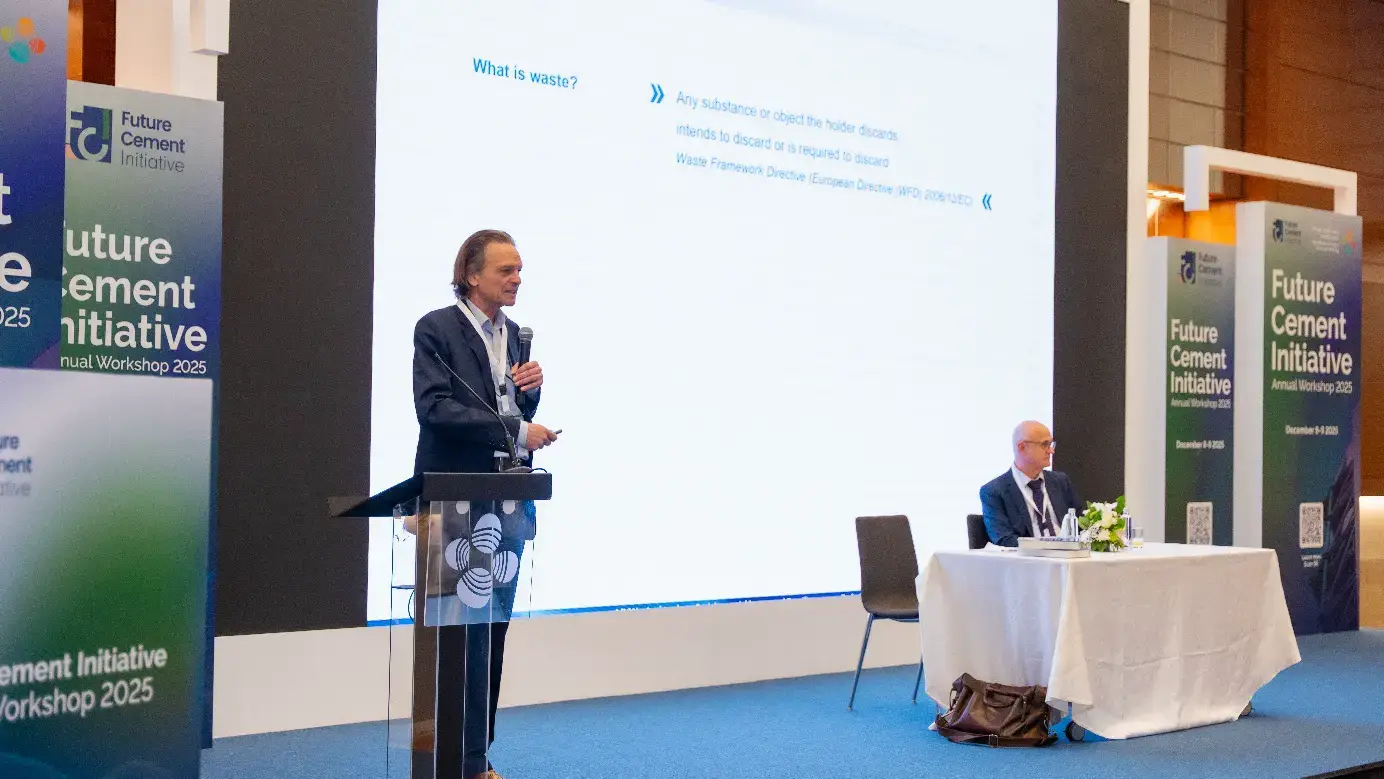
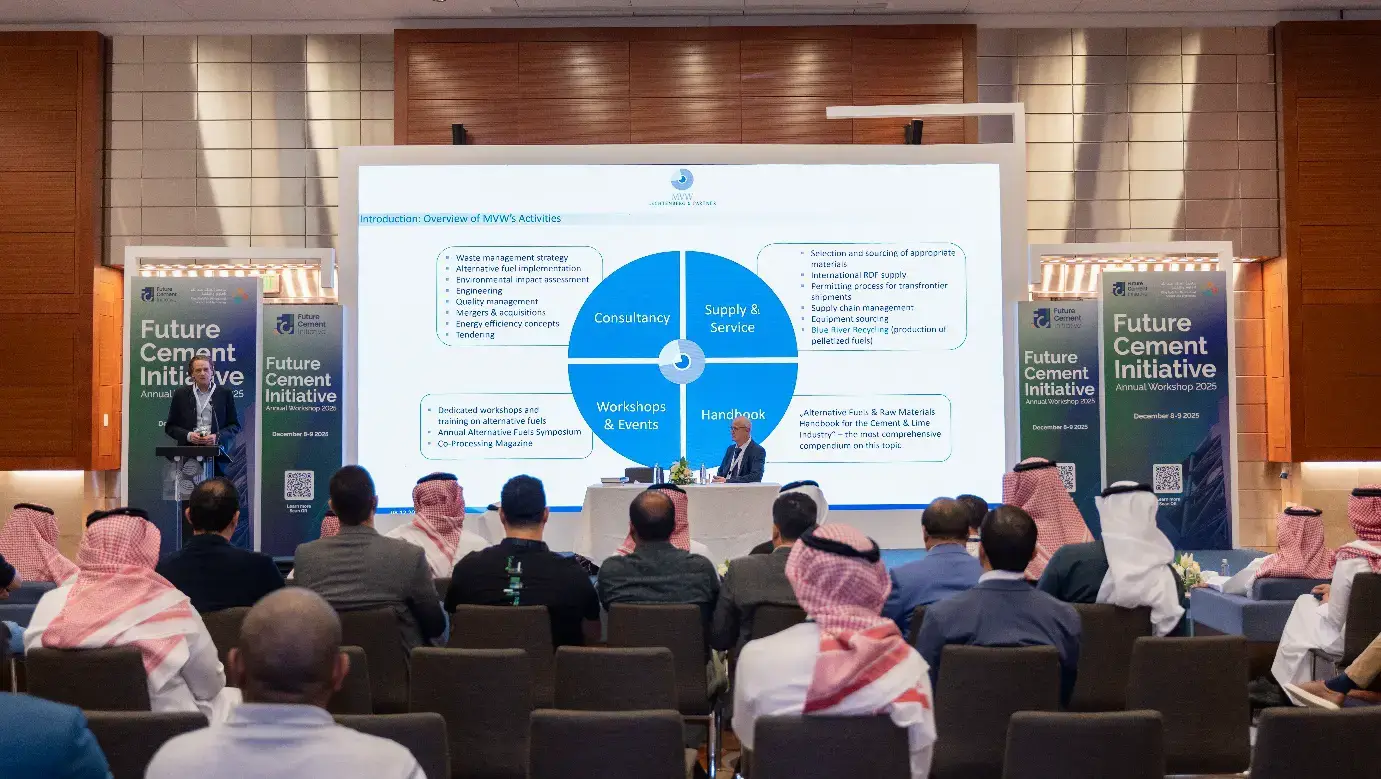
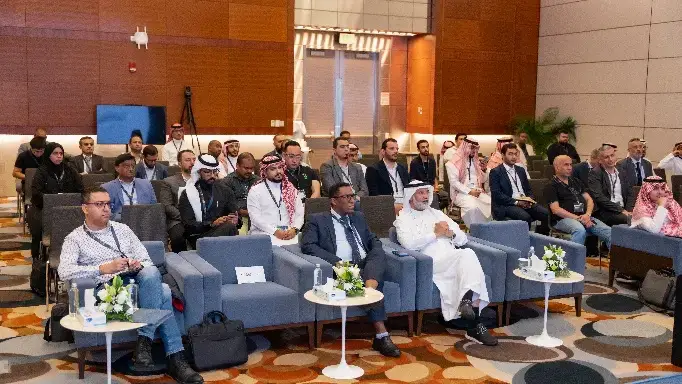
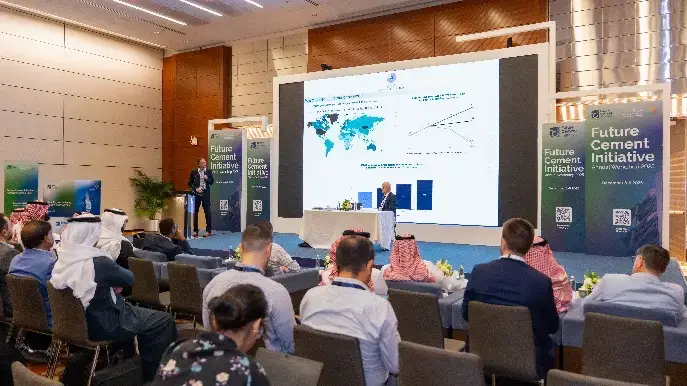
MVW technical workshop at KAUST, Saudi Arabia, 9th December 2025
Together with the Future Cement Initiative (FCI) at King Abdullah University of Science and Technology (KAUST), MVW Lechtenberg & Partner delivered a high-level technical workshop guiding more than 110 participants through the entire RDF value chain from characterising waste to feeding engineered fuel into the kiln.
The transition toward low-carbon cement production is no longer optional it is a necessity. As the industry faces increasing pressure to reduce emissions and its dependency on fossil fuels, waste-derived or refuse-derived fuels (RDF) are rapidly emerging as a practical and scalable solution. Against this backdrop, the Future Cement Initiative (FCI) at KAUST in the Kingdom of Saudi Arabia, in collaboration with MVW Lechtenberg & Partner, hosted a high-level technical workshop on “Mastering Waste-Derived Fuels (RDF): Production, Handling & Kiln Integration for Cement Plants” on 9 December 2025.
The workshop was led by internationally recognised alternative-fuels experts Dirk Lechtenberg and Dr. Hansjörg Diller, and brought together more than 110 participants from across Saudi Arabia representatives from cement companies, municipalities, regulatory authorities, and waste management firms. The strong turnout reflected the growing momentum around alternative fuels in the region and the demand for practical, implementation-focused knowledge.
It begins with understanding the waste. Participants were guided through methodologies for identifying, quantifying, and characterising waste streams from the municipal, commercial, and industrial sectors. Particular attention was given to sorting campaigns and representative sampling, which form the basis for determining both the quantity and quality of RDF. Without reliable data, even the most advanced technologies cannot deliver consistent results.
RDF production technologies. Building on this foundation, the sessions moved into how municipal waste is treated into an engineered fuel from pre-shredding and ballistic separation to air classification and optical sorting. The message was clear: there is no “one-size-fits-all” solution. Process design must be tailored to local waste composition and to the specific requirements of the cement plant.
The interaction between RDF and clinker production. While alternative fuels offer clear environmental and economic benefits, their impact on kiln operation must be carefully managed. Topics such as ash chemistry, chlorine and sulphur cycles, and the behaviour of volatile elements were explored in detail. Improper fuel characteristics can lead to build-ups, coating formation, and reduced clinker quality while well-managed RDF integration can significantly increase thermal substitution rates without compromising performance.
Quality management systems. Underpinning long-term success in alternative fuel use, the workshop moved from defining fuel specifications to implementing robust sampling and laboratory analysis procedures. Drawing on European best practices, the sessions demonstrated how structured quality control minimises risks and builds confidence between RDF producers and cement plant operators.
Storage, handling, and feeding. Efficient logistics are essential for a stable and continuous fuel supply to the kiln. Participants explored storage concepts from enclosed halls and silos to moving-floor systems and deep bunkers alongside key fire and explosion prevention measures. The discussion extended to dosing and feeding technologies, including mechanical and pneumatic conveying, and the strategic selection of feeding points such as the main burner, calciner, or kiln inlet.
Strategy and implementation. Successfully adopting RDF demands more than technology it requires a well-structured supply chain, clear contractual frameworks, and alignment with regulatory conditions. Participants examined different business models for sourcing and supplying alternative fuels, including long-term contracts and performance-based mechanisms. In Saudi Arabia these discussions are particularly relevant as the country advances its Vision 2030 goals to reduce landfill use and promote circular economy solutions.
What made the workshop particularly impactful was its holistic approach connecting the entire RDF value chain, from waste generation and processing to kiln integration and strategic planning.
This integrated perspective is essential for developing projects that are not only technically feasible but also economically viable and environmentally sustainable. The strong participation from such diverse stakeholders underscored a key message: the transition to alternative fuels is a shared responsibility. Cement producers, waste management companies, regulators, and municipalities must work together to unlock the full potential of RDF, and workshops such as this serve as an important platform for knowledge exchange, capacity building, and collaboration across the sector.
As the cement industry continues its journey toward decarbonisation, RDF will play an increasingly central role. The KAUST workshop demonstrated that, with the right combination of technical expertise, quality control, and strategic planning, waste can be transformed from an environmental challenge into a valuable energy resource reducing emissions while contributing to a more circular and sustainable industrial ecosystem.